Wendy Smith is a Unite member, member of CACCTU and one of the founders of Norfolk Campaign against Climate Change.
People have been shocked at the recent news of deaths from extreme heat and flooding across the globe. Three of the world’s wealthiest men have been racing into space in an effort to find new sources of profit. Meanwhile our government here seems determined to rush the UK into a return to pre-pandemic business as usual. There has never been a more urgent need to fight for effective action in the face of climate catastrophe. The COP26 talks in Glasgow in November present our world leaders with a vital and timely opportunity to deliver more than vague targets and future promises.
The Campaign against Climate Change Trade Union group (CaCCTU) will be launching this autumn the eagerly-awaited update to their groundbreaking pamphlet, “One Million Climate Jobs”, first published in 2004. At the heart of this new report is a core model for a new public service – a National Climate Service – that can get the job done by seeing to the integration of training, redeployment, planning and the interface between sectors (e.g., between industries and energy, or the complex planning needed to integrate and balance public transport).
The Climate Jobs campaign argues we need a sustainable transformation of construction, transport and power among other sectors. Several unions organise workers in these industries and, in order to win the changes we need, these unions should get behind these demands, building support for a transition of the economy and for massive investment in well paid jobs which tackle the climate emergency. In particular, Unite, one of the biggest unions in the Britain, can play a crucial role. Unite is in the process of electing a new General Secretary.
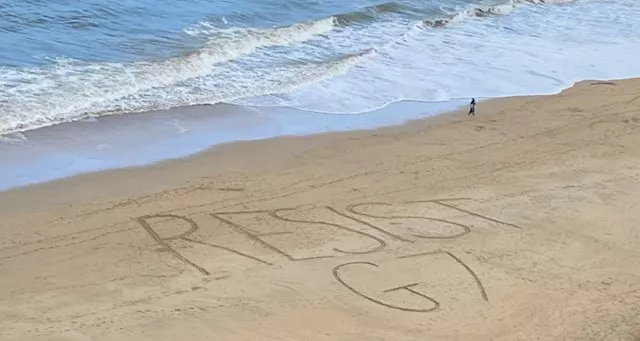
Tony Staunton is a member of the Campaign against Climate Change steering group and one of the founding members of the Resist G7 coalition, initiated by grassroots activists in Cornwall and the South West. Here he sets out how climate justice is not on the table at the G7 and the need to resist.
The G7 is a meeting of the world's most powerful political leaders, scheduled for 11th-13th June 2021 in the UK. These leaders govern the richest countries in the world in their own interests, and the G7 exists to keep it that way.
These government ministers will sit behind military security to meet at a luxury hotel complex in one the most picturesque but poorest regions of Europe - Cornwall. Resetting the global economy after the Pandemic will be the key discussion throughout, with the Climate Emergency centre-fold and used to dominate the media with messages of new economic growth through questionable "Green Technologies", promoted by billionaire Bill Gates and his ilk.
Global capitalism - the neoliberal free-market domination of the transnational corporations for agrochemicals, industrial agriculture, biofuels, together with the so-called Negative Emissions Technology (NET) of Carbon-Capture-and-Storage, mini-nuclear power plants and carbon trading - is the default setting.
The G7 wealthiest nations, hosted by UK Prime Minister Johnson, has invited India's Prime Minister Modi, currently assaulting millions of small farmers to enforce corporate dominance of food markets, and Australia's Morrison, the coal and uranium enthusiast.
The headlines from the G7 will be a prelude to what can be expected from the COP26 deliberations in November, once again led by the UK.
The Campaign against Climate Change is supporting the Resist G7 Coalition established soon after the venue was announced. Based in Cornwall, England, the Coalition has issued the call for action in every community, town and city with a day of action for Climate on Friday 11th June and an international manifestation of opposition to G7 neoliberalism on Saturday12th.
Local protests will take place in Cornwall, with convergence centres and counter-conferences in Penzance and Falmouth. The continuing risk from COVID variants makes the long journey to Cornwall by coach unsafe, and any physical protests called by the Coalition will seek to ensure ensure social distancing and personal protection.
UK trade union leaders have written to the Chancellor calling on him not to cut funding from the Green Homes Grants scheme. They say removing around £1 billion from the scheme would jeopardise the UK’s chances of a green recovery, and put jobs at risk. With severe administrative problems caused by mismanagement of the scheme by US firm ICF, they also call on the scheme to be brought under public sector control.
Gail Cartmail, Unite Assistant General Secretary said, "The UK has some of the poorest housing stock in western Europe and 'fuel poverty' is rampant – so the need for a comprehensive housing renovation programme - with the 'green' agenda at its heart - is desperately required. The current failings in the Green Homes Grants scheme has been abetted by awarding the contract to a US firm, when, during the pandemic, it is the public sector that has more than proved its worth as the standard bearer of delivering services in a timely fashion. This contract should be brought back under public sector control immediately."
John Moloney, PCS Assistant General Secretary said, "The failure of Boris Johnson's Government to deliver on the Green Homes Grant – already at best a drop in the ocean initiative to tackle the climate emergency – exposes the truth about their world beating leadership on climate change and the large scale investment needed for a green recovery."
Suzanne Jeffery, Chair of CACCTU said "At a time of a jobs crisis and climate crisis and in the year UK hosts COP26, it's a dangerous and unnecessary failure. Cutting back this scheme threatens jobs and climate action."
We've had the big announcement: Boris Johnson’s ten point plan for a ‘Green Industrial Revolution’. But following initial positive headlines, the details start trickling out. £12 billion was announced, but just £3 billion, it emerges, is new money. This is paltry. Other countries have already made much larger commitments, including Germany's green stimulus of over €40bn and France around €35bn.
Most importantly, how does it stack up compared to the scale of the task facing us? Two years on from the IPCC’s ground-breaking report calling for an urgent transformation of the global economy to stay within 1.5C above pre-industrial levels, global emissions are still (excluding the limited impact of the pandemic) on an upward trend. As temperatures continue to rise, sea level rise is accelerating as polar ice melts. And in the background a steady stream of records broken for ‘natural’ disasters like hurricanes and wildfires, hitting the poorest hardest.
The UK’s carbon budgets reflect out of date targets, an 80% cut in emissions by 2050. Previous policy failure means we are nowhere near on track to even stay within these deficient targets. This latest set of announcements is therefore doubly inadequate. It leaves a major hole in meeting even these out of date commitments. However we don’t just need to close that gap. Last year the government set a new climate commitment of ‘net-zero’ carbon by 2050. In relation to this new target, the gap is even greater. But unfortunately even ‘net zero by 2050’ doesn’t cut it. We need to act even faster than 2050 to be compatible with the Paris Climate Agreement.
Meanwhile, we also face a devastating pandemic leaving in its wake widespread unemployment. Now is the time for a real climate jobs programme to tackle the climate and jobs crises.
What would a real 10 point plan to tackle the climate crisis look like?
1. A comprehensive approach
Climate change cannot be tackled as an add-on, or a piecemeal approach that takes us one step forward, two steps back. We need a commitment that every economic policy, every spending commitment, every piece of legislation, will put us on track for a safer future, not jeopardise it by locking us in to business as usual.
If the government had really taken on board the scale of the crisis, it would be rethinking the policies of unconditional corporate bailouts, planning deregulation, aviation expansion, road building, stifling onshore wind. It would not be giving a £16.5 billion windfall to military spending.
2. Meeting the needs of both people and planet
Austerity has left us, more than ever, with a grossly unequal society with continued deep inequalities in race, gender and for disabled people. Underfunded public services are struggling. The move towards a zero carbon society must also ensure access to food, healthcare, education, income, job security, good, affordable, housing, clean and affordable energy and heat, public transport, clean air and green spaces for everyone.
There is huge public support to ‘build back better’ as part of recovery from the pandemic, investing in public services and frontline workers. Instead, a public sector pay freeze is being mooted. These are the wrong priorities: we need huge investment and expansion in the public sector and the people who work in it.
3. ‘New Deal’ levels of spending
Boris Johnson has tried to compare his plans to Franklin Roosevelt’s New Deal. In today’s money, Roosevelt’s spending programme amounted to about £4,300 – for every American living through the turmoil of the Great Depression. In contrast £12 billion is about £180 each.
Our own ‘One Million Climate Jobs’ report or Green New Deal plans give more of a sense of the levels of investment and ambition needed if the government is taking this seriously. Other recent analyses include an IPPR report which estimates that £33 billion a year in additional annual investment is needed to meet the government’s net zero target, creating 1.6 million jobs, including £8 billion on homes and buildings and £10.3 billion on transport.
The pandemic has shown that money can be found. It has been found for other spending, including billions to private companies for medical supply and services in contracts awarded with no oversight, regulation or transparency. These are the sums of money that now need to be directed into tackling the climate crisis, sums that can actually make an impact in reducing emissions and would truly justify the term New Deal.
The brutal and casual murder of George Floyd has sparked an uprising. Protests have spread across the US and in other countries, fuelled by centuries of structural oppression and racism and a culture of impunity among the police force. The roll call of sons, fathers, daughters, grandmothers killed without justice did not start with Trump's presidency, but he has consistently promoted racist violence in his statements and his policies.
We stand with the international protests. Black Lives Matter. And here in the UK we cannot merely see racism as a US issue. Black lives matter in police stations. Black lives matter in hospital wards and care homes, on trains and buses, in schools and colleges - the shocking disparity in BAME Covid deaths even more dramatic among health and social care staff and transport workers. Black lives matter in the 'hostile environment'. As individuals, we must listen and learn. As climate campaigners, we must speak out.
Climate breakdown has always been an issue of racism as well as social and economic injustice. How could it be otherwise, when the Global South suffers so disproportionately from something it has done so little to cause? Environmental racism also manifests in the toxic pollution from fossil fuel extraction burdening low-income communities in many countries. This has led to the concept of 'sacrifice zones'. But when we compromise on cutting emissions, when 'moderation' is prioritised over climate scientists' stark warnings and call to urgent action, we are accepting the idea that poorer countries and vulnerable communities should be a 'sacrifice zone' for the sake of short-term profit.
We must insist on climate policy that says Black Lives Matter. We must stand with those, particularly indigenous peoples, who are defending their land, water and rights against fossil fuel companies and other resource extraction.
Right now we are heading for a recession that, like the pandemic, exacerbates all existing inequalities. And governments are handing out billions to prop up high-carbon industries. Campaigning for a green recovery which is also a just transformation of society, shaped by the voices those on the streets, demanding an end to racism and injustice - this campaign has never been more urgent.
Rest in Power George Floyd. Solidarity with #BlackLivesMatter. There is no climate justice without an end to racism
It was a great shock to hear that Nita Sanghera, vice-president of UCU and president elect, due to take office this May, passed away after a short illness. Nita was well known as not only a voice for working class young people in FE, but also a tireless campaigner for social justice. Due to the efforts of Nita and others, her union, the University and College Union, has emerged as one of the key trade unions in this country pushing for climate action.
In the video above, from our climate march in December 2018, she explains that for education to be relevant to young people, climate change must be a core part of the curriculum, leading to decent jobs that help solve the climate crisis. In the following year this became a key demand of the UK youth climate strike movement. We will remember her and take forward this vision: for real education, for social justice and for climate action.
Suzanne Jeffery, chair of Campaign against Climate Change, said:
"We are so incredibly saddened to hear of Nita's untimely death. She spoke at our demonstration last year, coinciding with COP 24. It was her first time speaking on the urgency of the climate crisis and the key role trade unionists need to play. She was brilliant, she inspired and informed in equal measure. Nita's speech as an educator and a trade unionists called for us all to step up and stand alongside young people. And she played a crucial role in ensuring the trade union movement did just that, ensuring her union UCU, were instrumental in the TUC voting for solidarity with school students on 20th Sept. We are grateful we were able to work with her, although all too briefly, and mourn the loss of a powerful voice for climate justice."
Guest post by Sean Vernell, University and College Union National Executive Committee
The TUC passed, unanimously, the composite motion calling for a 30-minute workday campaign action to coincide with the global school student strike on the 20th September. It is the first time that the TUC has called on its 6.5 million members to demonstrate support for school students taking action. Indeed, it is the first time in many years the TUC has called on its members to demonstrate its collective power in solidarity with anyone.
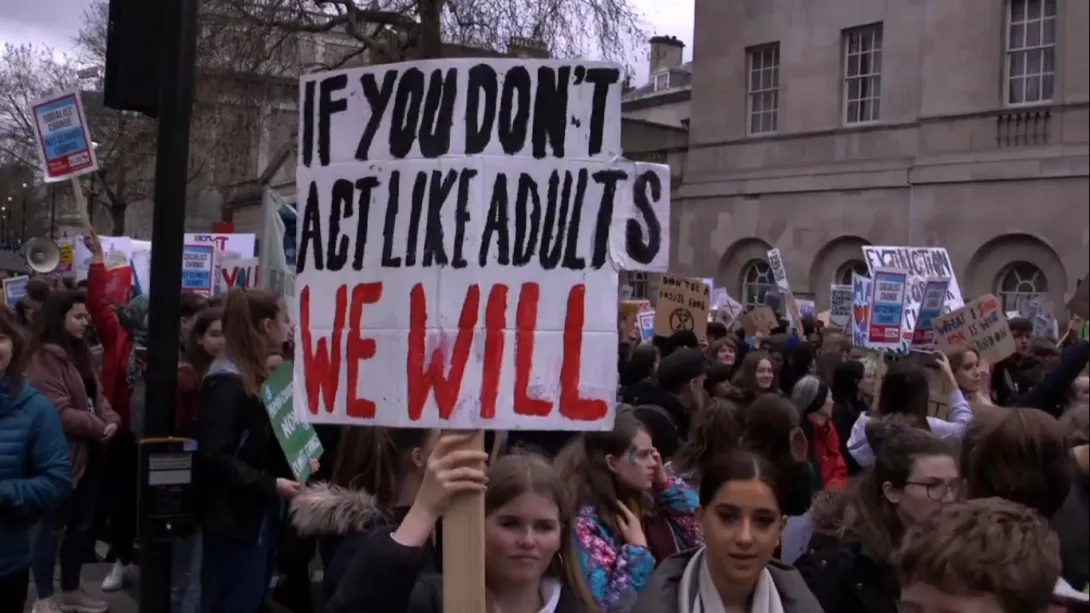
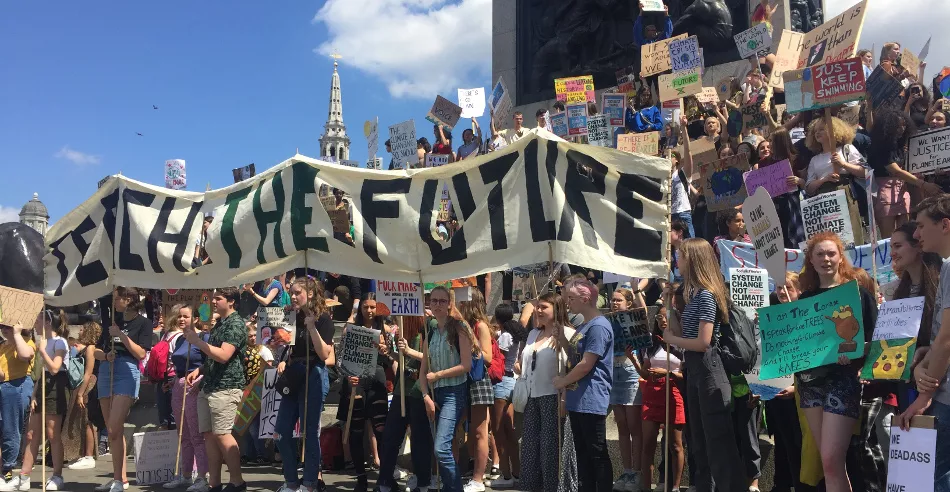
The trade union movement has a great debt to pay to the school students for transforming the debate over climate change and making it one of the main priorities amongst working people.
TUC conference has today unanimously passed a motion to support the school student Global Climate Strike on 20th September and has called on TUC affiliate Unions to organise a 30 minute work day campaign action to coincide with the school students strike on 20th September.
We congratulate the delegates at TUC who have voted to recognise the significance of the Global School Students strikes, initiated by Greta Thunberg and the need for adults and especially the Trade Union movement to stand alongside young people, to ensure they do not stand alone in fighting for the urgent action needed to tackle climate change and ecological crisis and to deliver Climate Justice.
We ask all Trade Unions to now turn words into action and get organised to build on the fantastic examples of Trade Union solidarity action already in place for 20th September.
The 20th September is already set to be the biggest turnout of working people many organised through their Trade Unions in the UK uniting in solidarity with young people. But it can be even bigger and we still have two weeks to deliver solidarity action to put hundreds of thousands of Trade Unionist onto the streets.
We would like to salute the young people who have led the action and also the UCU NEC members who put forward the motion to TUC conference calling for a 30 minute stoppage. They have been bold enough to recognise the urgency of the climate crisis and the need for Trade Unionists to not only respond to the call for Trade Unions to join them but to be bold in their actions and demands. The support for the UCU statement with over 2000 Trade Unionists and over 100 organisations backing the call for solidarity and a 30 minute workplace stoppage on 20th has also shown us the appetitive that there is for climate action within the Trade Union movement.
We ask all Trade Unionists to do everything they can to match the boldness required of us by the urgency of the Climate Crisis. We have just under two weeks now to build maximum solidarity on the 20th.
This is just the beginning and we will need to continue the work of building solidarity, fighting to ensure our unions have the most progressive policies which match what the science tells us that we need to do and to continue to demand the Climate Jobs and a Green New Deal which can deliver the Just Transformation that we need.
Guest post by Sean Vernell, University and College Union National Executive Committee
UCU, at this year's TUC congress, has tabled a motion calling for the trade union movement to support a 30-minute workday stoppage to coincide with the global school student strike on the 20th September.
Almost 2000 people and 90 union branches and climate campaign organisations have signed a petition in support of the motion (you can add your name here). The catastrophe that is unfolding in the Amazon has sparked outrage across the globe. The G7s response of agreeing a £18 million donation to resolve the problem is wholly inadequate and confirms the urgent need for the trade union movement to step up the campaign for climate justice.
Unfortunately, rather than seeing what is taking place in the Amazon as a signal to renew efforts to rise to the challenge of climate change, there now is an attempt to water down UCU's motion call for a 30-minute stoppage. An amendment tabled by the train drivers' union ASLEF attempts to replace the word 'stoppage' to 'working campaign action'.
Some unions seem to prefer the ASLEF wording and say they will be supporting the amendment. UCU believes that this would be a mistake.
UCU accepts that a motion that is supported by the TUC calling for 'a 30-minute working campaign action to coincide with the global school strike on the 20th September' (which is what the ASLEF amendment says in full) would be a step forward for the movement against climate change. However, it is clearly not the bold and audacious call that is needed at this crucial juncture we have arrived at.
We are unclear what 'working campaign action' actually means. If it is a survey or quiz about climate change then clearly this will be nowhere near what is needed.
Those supporting the ASLEF motion do so because they are concerned about the legality of the UCU's motion calling for a workday 'stoppage' without a ballot. They also argue that, if passed, it could put union members at risk of victimisation by their employers.
On the first concern raised, the way the unions laws are designed makes it near in possible for workers in Britain to obtain a legal ballot over climate change and even if a union could find a way (ie impact on health and safety) they would need to adhere to the new 50% thresholds.
The movement has to face up to the issue of taking action 'illegally'. Trade union history is filled with examples of workers breaking laws to ensure that society can progress. We as a trade union movement exist because six rural farm workers took 'illegal' collective action less than 200 years ago. They did so because for them it was a matter of life and death. To ensure that their families did not starve they had to take 'illegal' action. When a law is unjust it's the duty of the trade union movement to challenge that law.
On the second concern raised about putting at risk union members it is clear many employers are very supportive of their workforce taking action over climate change. For example, Patagonia, the outdoor gear company is actively encouraging its workers to take action on the 20th. It also has global policy of providing bail for workers arrested during climate protests! Germany's GLS ethical bank says it will close on the 20th September to allow staff to attend marches on the day. Tower Hamlets Council is supporting the students protest on the 20th and are keen to create opportunities for their staff to show their solidarity and are looking to organise a rally on the day with unions. There are many employers that are sympathetic to the school student climate protests and of their workers showing their support for them.
The trade union movement mustn't lag behind what some of the more advanced employers are saying and doing – it must put itself at the forefront of this global uprising both with alternatives to fossil fuels and action.
Guest post by Sean Vernell, University and College Union National Executive Committee
Greta Thunberg has called for the next global school student strike on the 20th September. This strike will kick off a week of climate action which finishes on the 27th September. It looks set to be one of the biggest days of action for climate justice yet. According to the Financial Times the employers too are feeling the pressure to move to support the global school student strike on the 20th September.
The UCU NEC has voted unanimously to send a motion to this year's TUC congress demanding that the TUC organise a 30-minute solidarity strike with the school students on the 20th September.
We have launched an online petition calling upon trade union leaders, workers, students and climate activists from across the movement to get behind the call to support the motion calling for a 30-minute stoppage. Whilst some may, understandably, feel that this is not enough, if passed it would potentially give millions of workers a little more confidence to take action on the day to support the school students.