


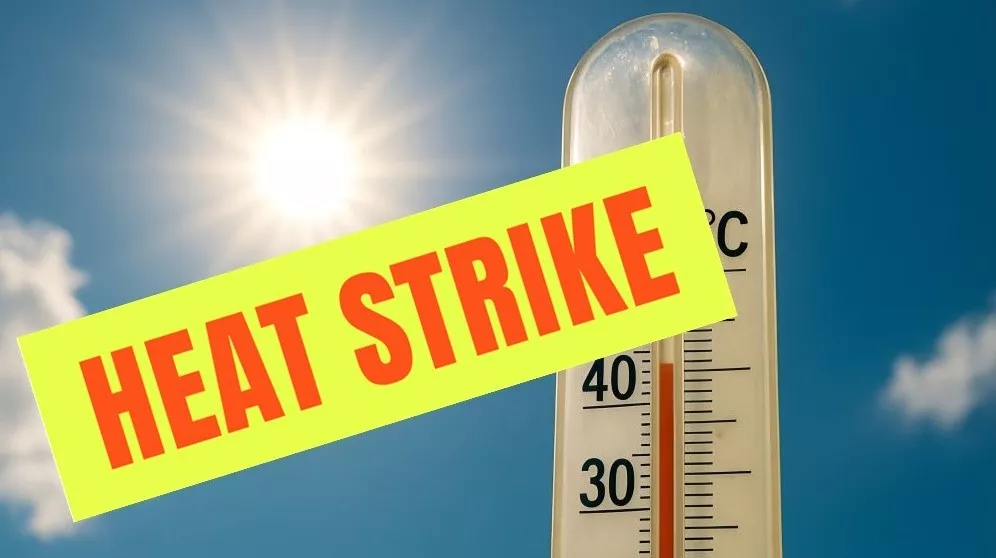
Summer temperatures are breaking records but despite trade union campaigning there is still no maximum legal working temperature in the UK. And the same newspapers splashing headlines about the record-breaking heatwave will still be running editorials this week urging the government to roll back climate policy and abandon 'net zero' targets.
We need to make it clear:
Take a thermometer to work to measure your workplace’s temperature. This can be important to negotiate safer working conditions, but you can also take a photo of the temperature
Take a group photo with a Heat Strike sign (home made is fine!)
Email any photos to info@heatstrike.uk and share on social media with hashtag #HeatStrike
It's still a red warning in many places - stay safe and if you can stay home or find a shady or air conditioned spot
Resources for union members and for individuals
Currently the UK has a legal minimum workplace temperature but NO legal maximum temperature. As heatwaves increase in frequency and severity this is increasingly untenable.
Trade unions have been calling for a maximum working temperature since 2008. The TUC, supported by many UK trade unions are calling for employers to be required to take action at 24C which is the World Health Organization recommendation for maximum temperature for working in comfort. At this point the employer should be required to take action to ensure the temperature does not go above this. In addition there should be an absolute maximum temperature of 30C (27C for those doing strenuous work), at which point workers should not have to work.
The Climate Change Committee endorsed the need for a maximum workplace temperature in their recent report on adaptation which reported "The UK was built for a climate that no longer exists today and will be increasingly distant in years to come."
We need a maximum working temperature to protect workers from unsafe and unreasonable working conditions, and investment to ensure our workplaces are fit for heatwaves today and in the coming years. From bus drivers sweltering in cabs where the temperature is above 40C to teachers struggling in classrooms designed for the 'climate that no longer exists', this is no longer something government and employers can ignore.
Sign and share: TUC petition for a maximum working temperature
Sign up to take action: Heat Strike campaign for a maximum working temperature, a heat furlough scheme and climate action. Resources pack includes a poster for workplace awareness.
Employers are duty-bound to ensure, as far as reasonably practicable, the health, safety, and welfare at work of their employees. There are many adjustments that employers can put in place, including proper ventilation and extraction, provision of clean drinking water and cups, extra breaks, breathable PPE, adjusting production and length of shifts, providing cool down areas and regular rotation of staff in hotspots.
Employers must undertake risk assessments to identify hazards in the workplace, including climate change-related hazards such as heatwaves.
Measures to reduce the risk of harm to employees should be implemented. If conditions change, such as the risk of extreme temperatures, employers should review and update risk assessments accordingly.
Employers must protect staff who are particularly vulnerable to heat, potentially requiring individual risk assessments.
As a last resort, Section 44 of the Employment Rights Act 1996 provides workers protection from detriment (i.e. dismissal, disciplinary or a pay cut) if they withdraw from and to refuse to return to a workplace that is unsafe. Workers are entitled to remain away from the workplace if – in their opinion – the prevailing circumstances represent a real risk of “serious and imminent danger” which they could not be expected to avert.
TUC interactive guide 'Too Hot, Too Cold'
Individual unions also have advice and campaigns on the issues which affect their members - for example Unison's advice includes information about protecting vulnerable people in the heat.
Heatwaves are becoming more extreme because of climate breakdown, so we see events such as the summer of 2022 when UK temperatures hit 40C for the first time, or this year's heatwave shattering May temperature records. Trade unions acting on health and safety in the heat are protecting their members now, and also witnessing how the effects of burning fossil fuels are endangering us all.
There is a dangerous backlash against 'net zero' and climate action, but without taking action on climate change the severity of heatwaves will simply continue increasing, until we cannot adapt to keep ourselves safe. Climate change isn't an elite 'middle class' concern, it's a working class and trade union issue (read more about the trade union year of climate action).
It's also an important issue of international solidarity for the labour movement. Excessive heat is estimated to affect more than 2.4 billion workers worldwide. Countries like India are on the front line of climate breakdown, with increasingly extreme heatwaves, and millions work outdoors in the informal economy.